Money for nothing scams
Money for nothing scams

What's coming up?
Many scams try to trick you into paying money for nothing. In this activity, we’ll describe some of those scams and how to avoid them.
The scams you’ll learn about include investment schemes, dating and romance scams, charity scams, and virus and hacking scams.
Start activityHow to avoid money for nothing scams
Money for nothing scams take many forms, but their main purpose is to get you to give money to someone you don’t know for something you don't fully understand. If you hand over any money, you will receive nothing in return.
The key to avoiding them is to be careful about who you exchange money with online. If someone you’ve never had dealings with before emails you asking for money for anything, that should be a warning sign that something is wrong. Let’s look at the most common money for nothing scams, so you know how to spot them.
Investment schemes
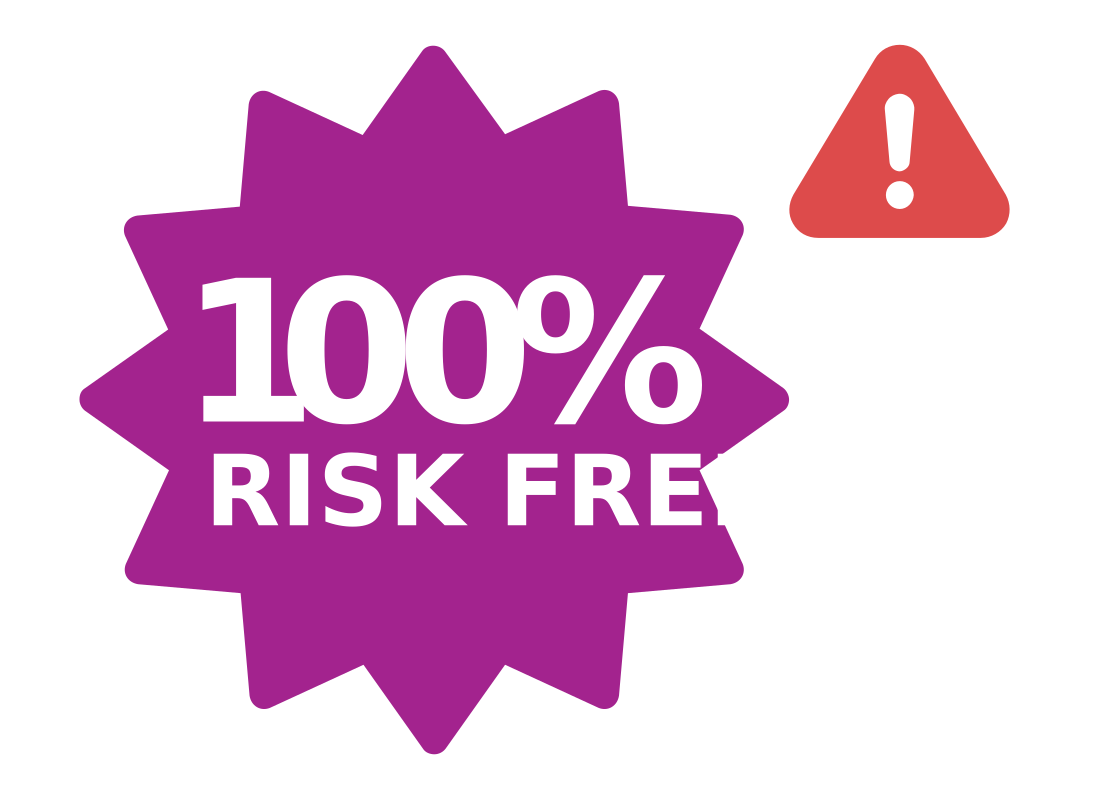
In this type of scam, you receive an email offering the opportunity to join a major investment opportunity at a heavily discounted rate. You will be pressured to make a decision quickly as the scammer doesn’t want to give you time to think!
If someone you don’t know contacts you with a get rich quick scheme, there’s a high chance the whole thing is a scam. Do not hand over any money and delete the email.
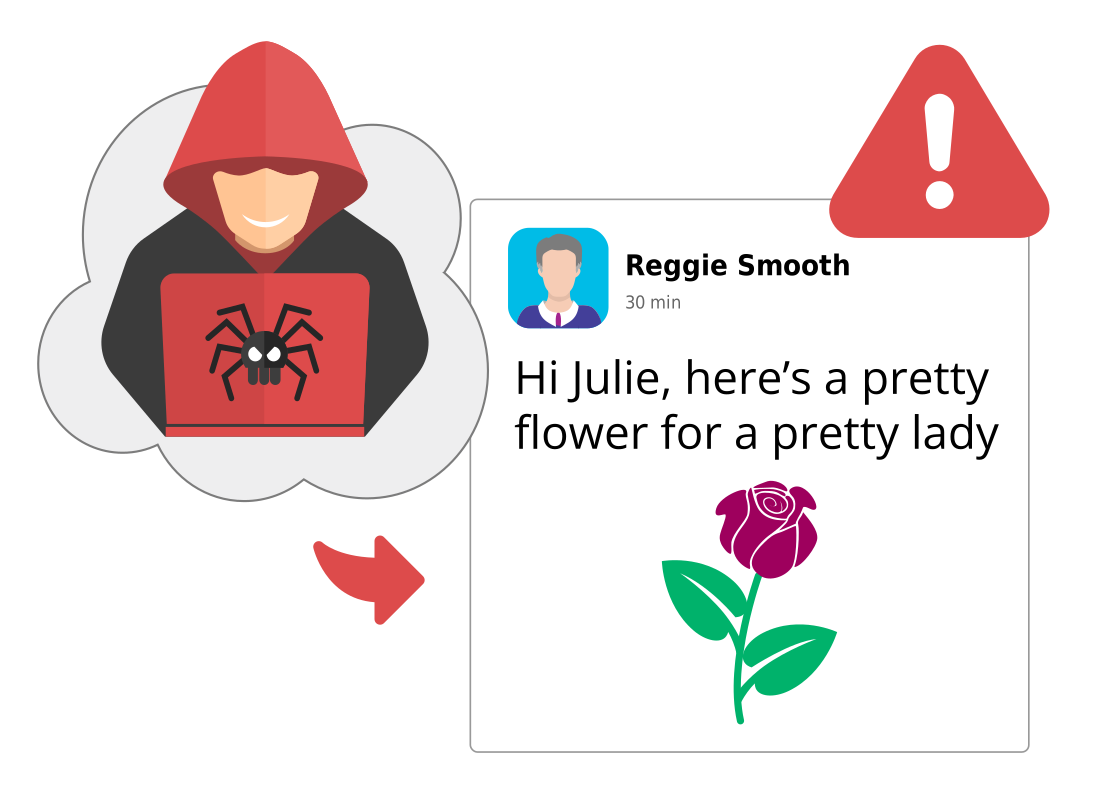
Dating and romance scams
Online dating is a popular pastime on the internet, but you may come into contact with someone who is not who they claim to be. That person might spend months developing a relationship over email, then try to trick you into paying for things like (fake) emergency medical expenses.
Don’t be tricked by their hard luck stories. The people behind this sort of scam are very convincing and want to take advantage of your kind nature.
Charity scams
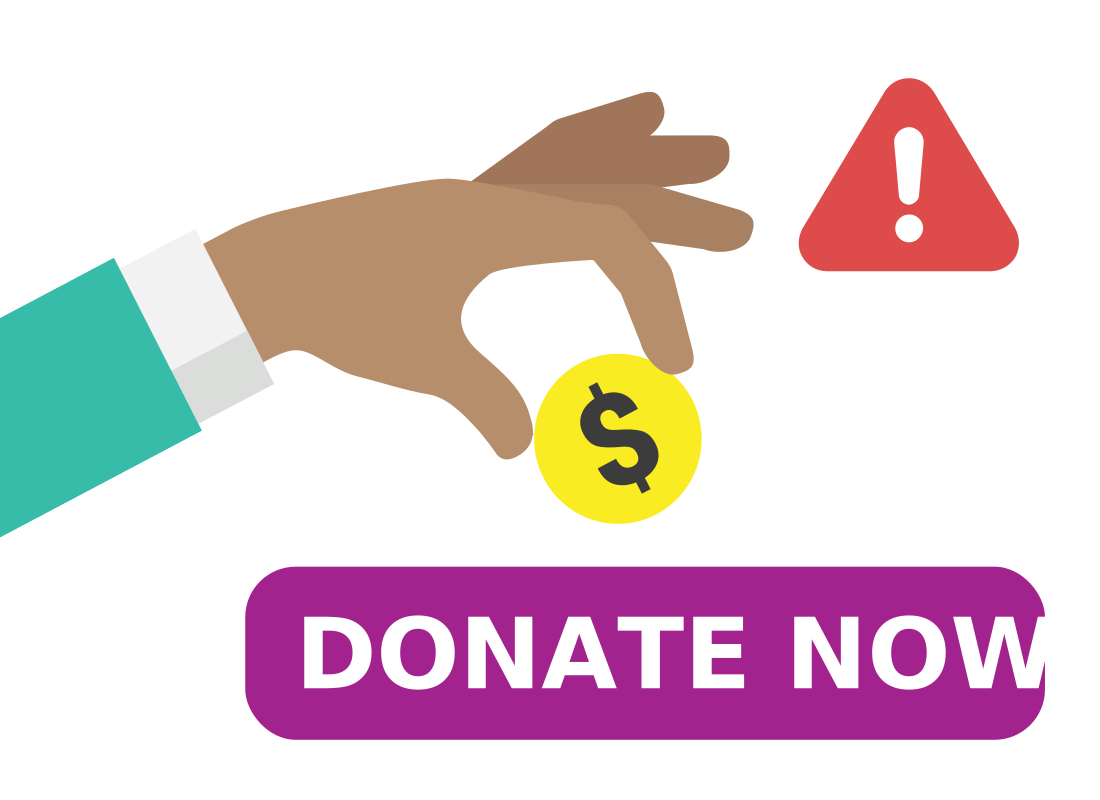
These scams sometimes happen after disasters. These people pretend to gather money for the victims but really keeps it for themselves.
If you get an email message asking for money for a charity, ignore it and do not make a donation in that way. If you do want to make a donation, go directly to the website of a well-known charity, where you will be able to donate safely.
Viruses and hacking scams
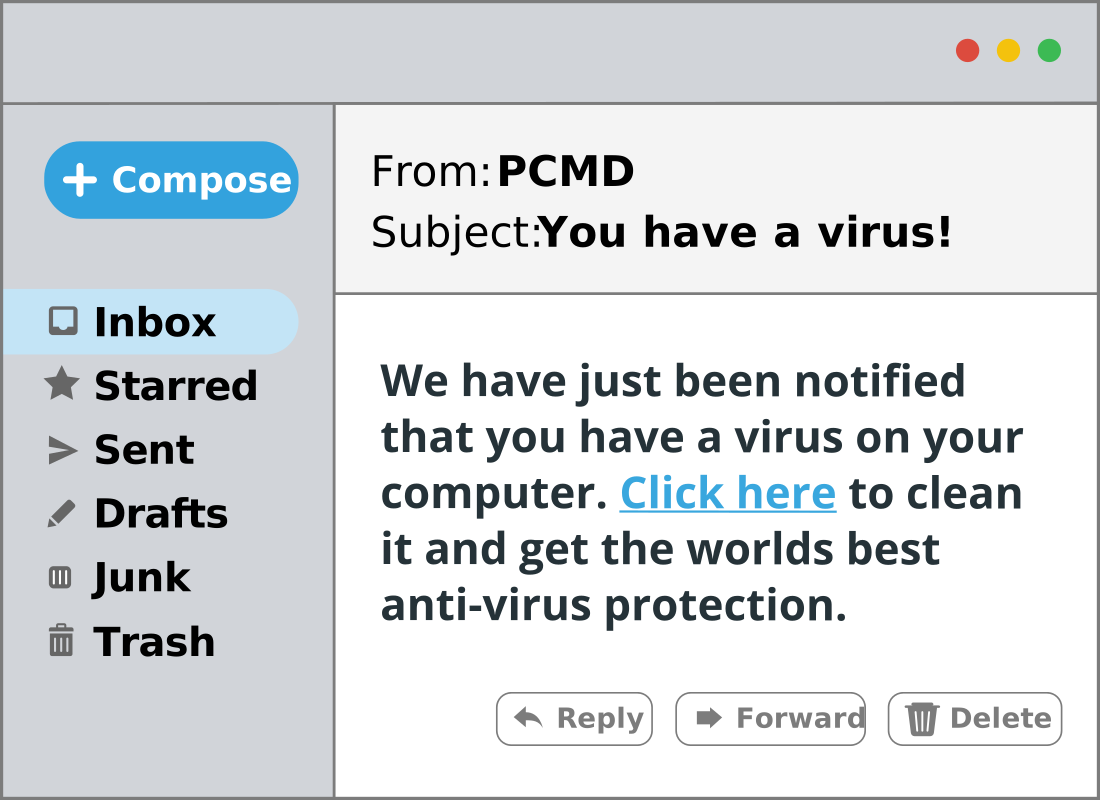
With this scam, you receive an email or phone call saying that a problem has been found on your computer, but the person contacting you can help. You just have to pay them money and they will fix the computer for you.
Your computer doesn’t have a problem, and you don’t need anything fixed. It’s actually not possible for a caller or someone on the internet to discover a problem with your computer.

What do you do?
If someone you’ve never met or heard of contacts you and says that a problem has been detected on your computer, you should delete the email or hang up on them.
Well done!
Now that you’ve completed the activity on Money for nothing scams, you’ll see that internet scams aren’t much different to real-life scams that have been around for decades. With care, caution and common sense, you can avoid being caught up in one.
Up next, if you have registered and are logged into the Be Connected website, you’ll now be able to take a short quiz to finish the Avoiding common scams course. If you’re not registered, you are now at the end of the course.